Every detailer has an opinion, and most of them are trying to sell you something. Wax guys say ceramic coating is overpriced marketing. Ceramic guys say wax is a waste of a Saturday. The truth is more boring than either camp wants to admit: they solve different problems, at different price points, for different types of car owners.
Here’s the actual comparison, without the sales pitch either way.
The Short Answer: It Depends on Protection Level, Budget and Time
If you want a number: wax costs less upfront but needs reapplying every 2 to 3 months. Ceramic coating costs more upfront but lasts 2 to 5 years depending on the product and application. The right choice comes down to three questions:
● Budget: Are you comparing a $30 tin of wax to a professional coating job, or DIY versions of both?
● Time horizon: Keeping the car 12 months or 8 years changes the maths completely.
● Risk tolerance: Ceramic coating doesn’t fix bad paint. It locks in whatever condition the paint is in when it’s applied.
What Is Car Wax and How Does It Protect Your Paint?
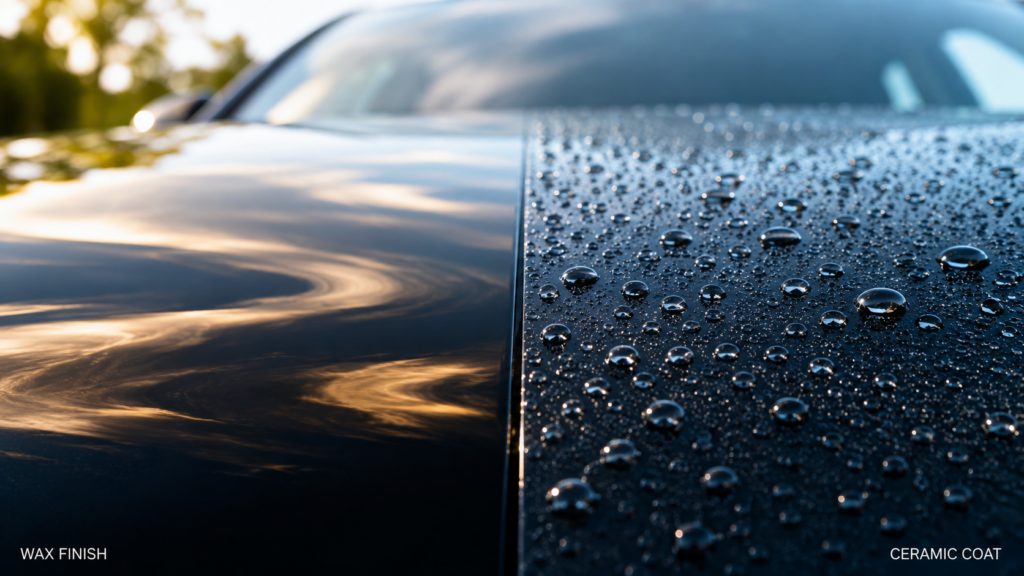
Wax is a sacrificial layer, usually carnauba-based or a paste/liquid synthetic blend, that sits on top of the clear coat and takes the UV and chemical damage instead of your paint. It breaks down over weeks, which is exactly why it needs reapplying so often. The upside is that it’s cheap, forgiving to apply, and gives that classic warm, deep gloss a lot of owners actually prefer over the more glassy ceramic look.
If you’d rather have it done properly than spend a Sunday on your knees in the driveway, an exterior wash and hand wax service gets you the same protection without the elbow grease.
What Is Ceramic Coating and How Is It Different?
Ceramic coating is a liquid polymer that chemically bonds to the clear coat rather than sitting on top of it. Once cured, it forms a semi-permanent hard layer, typically rated 9H on the pencil hardness scale, that resists UV, bird droppings, chemical etching and light scratching far better than wax ever will. It doesn’t wash off in the next rain or with one aggressive detergent, which is the actual reason it costs more.
This is a job worth getting professionally applied rather than DIY, since prep and cure conditions matter more than the product itself. A paint protection service handles the full process, correction, decontamination and cure, in one booking.
Ceramic Coating vs Wax: Head-to-Head Comparison
Durability
Wax: 6 to 12 weeks before it needs topping up. Ceramic coating: 2 to 5 years depending on the product tier and how well it’s maintained. This is the single biggest differentiator and the main reason ceramic coating costs what it does.
Protection Level (UV, Chemicals, Scratches)
Wax offers light UV and chemical protection but almost no resistance to fine scratching. Ceramic coating offers meaningfully stronger UV and chemical resistance, plus a harder surface that resists the fine swirl marks that build up from repeated washing over time.
Cost (Upfront vs Long-Term)
A DIY wax costs $20 to $50 and a few hours every couple of months. A professional ceramic coating typically runs into the hundreds to low thousands depending on vehicle size and coating tier, but spread across a 2 to 5 year lifespan it’s often cheaper per year than consistently maintaining a proper wax routine, especially once you account for the labour.
Application Time and Maintenance
Wax takes 30 to 60 minutes and can be done at home with zero prep beyond a wash. Ceramic coating takes a full day to several days professionally, because paint correction and decontamination need to happen first, and the coating needs proper cure time before the car can be driven or rained on.
Paint correction before either treatment matters more than people think. A cut and polish pass removes existing swirl marks and oxidation first, so whichever protection layer you choose is going on top of genuinely clean paint rather than sealing in existing damage.
Gloss and Finish
Wax gives a warmer, slightly softer-looking gloss that a lot of owners of darker-coloured cars specifically prefer. Ceramic coating gives a harder, more reflective “wet glass” look that shows off crisp panel lines but can also show swirl marks more obviously if the prep work wasn’t done properly first.
Which One Suits Your Car and Driving Habits?
Daily Drivers
Ceramic coating tends to make more sense here. Daily drivers cop the most UV, contamination and wash-induced swirling, and that’s exactly where a durable coating earns its cost back over a few years.
Weekend or Garaged Cars
Wax is genuinely fine here, sometimes even preferable. Less exposure means less need for heavy-duty protection, and a lot of weekend car owners enjoy the ritual of waxing as part of caring for the car, not just the outcome.
Cars You Plan to Sell Soon
Neither, necessarily. If you’re selling within 6 to 12 months, a cheap wax before listing photos does the job. Paying for a multi-year ceramic coating on a car you won’t own long enough to benefit from the durability is money better spent elsewhere.
Common Myths About Ceramic Coating and Wax
● “Ceramic coating means you never have to wash your car.” False. It reduces how hard grime bonds to the paint, but regular washing is still required.
● “Ceramic coating is scratch-proof.” False. It resists fine swirling better than wax, but it won’t stop a key scratch or a shopping trolley.
● “Wax is outdated and pointless now.” False. For low-exposure, low-mileage cars, wax remains a genuinely sensible, low-cost option.
● “You can apply ceramic coating over old wax or sealant.” False. Coating needs a fully decontaminated, bare clear coat surface to bond properly.
Does Ceramic Coating Protect Resale Value Better Than Wax?
Generally, yes, but not because of the coating itself so much as what it prevents. Ceramic coating’s durability means the paint underneath is exposed to less cumulative UV and chemical damage over the ownership period, which is the actual mechanism behind long-term paint condition and resale value. A well-maintained waxed car can still present just as well at point of sale, but it requires far more consistent owner effort to get there, and most owners simply don’t keep up a strict enough wax schedule to match what a coating does passively.
How Victoria Park Conditions Affect Your Choice
For Victoria Park owners specifically, the case for ceramic coating is a bit stronger than the Perth average. The suburb’s mix of street parking, proximity to the Swan River, and higher daily traffic along Albany Highway means daily-driven cars here are dealing with more consistent UV and airborne contamination than a garaged car in a quieter outer suburb. That’s exactly the exposure profile where ceramic coating’s durability advantage over wax actually gets used, rather than sitting underused on a car that’s mostly garaged anyway.
If you’re weighing this up locally, Silver Sponge Victoria Park can talk through which option fits your specific car and driving pattern rather than a generic recommendation.
Frequently Asked Questions
Can I apply ceramic coating myself?
Consumer-grade ceramic sprays exist and are better than nothing, but professional-grade coatings require paint correction and controlled cure conditions that are difficult to replicate at home. DIY ceramic sprays typically last months, not years.
Do I still need to wash a ceramic-coated car?
Yes, every 2 to 3 weeks for a daily driver. The coating reduces how hard dirt bonds to the paint, it doesn’t eliminate the need to remove it.
Can you put wax on top of ceramic coating?
You can, and some owners do it for extra gloss, but it’s cosmetic only. It adds no meaningful protection since the ceramic layer is already doing the protective work underneath.
Which lasts longer in Australian sun, wax or ceramic coating?
Ceramic coating, by a wide margin. Australia’s UV load is exactly the condition wax struggles with most, since UV is the primary driver of wax breakdown.
Conclusion: Making the Right Call for Your Car
Wax isn’t outdated and ceramic coating isn’t overhyped. They’re different tools for different exposure levels and different ownership timelines. Daily drivers in high-traffic, high-UV areas like Victoria Park get more real-world value out of ceramic coating’s durability. Weekend cars and short-term ownership situations are often better served by wax’s lower cost and lower commitment. Match the choice to how the car is actually used, not to whichever camp shouted loudest online.