Introduction
Car seats cop plenty of punishment. Coffee gets knocked over on the morning commute, kids leave food behind, pets track in mud, and everyday use gradually creates marks that a quick vacuum cannot touch. Once a stain has dried or soaked into the upholstery, removing it can be considerably harder.
Knowing how to remove car seat stains properly starts with identifying the seat material and the type of stain. Fabric upholstery, leather and vinyl all respond differently to cleaning products and moisture. Using the wrong method can spread a stain, leave a watermark or, in some cases, damage the material.
The good news is that many common car seat stains can be treated successfully at home when you act quickly and use the right technique. For more heavily soiled interiors, professional cleaning can provide a deeper clean without relying on guesswork.
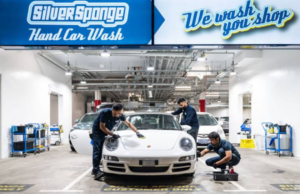
Silver Sponge provides professional car wash and detailing services across Perth, including interior cleaning, seat shampooing, leather cleaning and conditioning. Explore Silver Sponge car wash and detailing services
This guide explains how to tackle stubborn car seat stains safely, what cleaning methods work best and when it is better to leave the job to a professional.
What Causes Stubborn Car Seat Stains?
Not every stain behaves in the same way. The substance, how long it has been sitting and the material it has soaked into all affect the cleaning process.
Common causes include:
- Coffee and tea
- Soft drinks and juice
- Food and sauces
- Grease and oily residue
- Chocolate
- Milk and dairy products
- Ink and makeup
- Mud and dirt
- Pet accidents
- Sweat and body oils
- Children’s spills
- Watermarks from previous cleaning attempts
A fresh spill is generally easier to deal with than an old stain. As liquids dry, their remaining compounds can bond with fibres or penetrate deeper into the upholstery.
First, Identify Your Car Seat Material
Before applying any cleaning product, determine what your seats are made from.
Fabric Car Seats
Fabric and cloth upholstery can absorb liquids quickly. Spills may penetrate beneath the surface, which means wiping the visible mark alone may not completely remove it.
Fabric seats generally benefit from careful spot cleaning, agitation and extraction or shampooing when deeper contamination is present.
Leather Car Seats
Leather requires a different approach. It should not be treated like fabric upholstery or saturated with water.
A suitable leather cleaner followed by a leather conditioner is generally more appropriate. The aim is to remove surface grime while maintaining the leather’s finish and flexibility.
Vinyl Seats
Vinyl is comparatively resistant to spills, but harsh chemicals and aggressive scrubbing can still damage its surface or leave it looking dull.
A mild interior cleaner and a soft microfibre cloth are usually a safer starting point.
How to Remove Car Seat Stains: Step-by-Step
The safest approach is to work gradually rather than immediately reaching for a strong chemical.
Step 1: Remove Loose Dirt
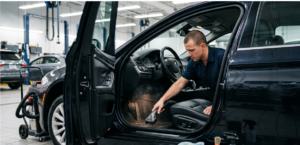
Start by thoroughly vacuuming the seat and surrounding areas.
Pay particular attention to:
- Seat seams
- Creases
- Stitching
- Seat edges
- Gaps between the seat and centre console
- Areas underneath the seat
Loose grit can act like an abrasive when you start scrubbing, potentially pushing dirt further into the material.
Step 2: Blot Fresh Spills
If the stain is still wet, blot it with a clean, absorbent microfibre towel.
Do not vigorously rub a fresh spill.
Rubbing can spread the liquid across a larger area and force it deeper into fabric fibres. Instead, apply gentle pressure and work from the outside of the affected area towards the centre.
Step 3: Test Your Cleaning Product
Always test a cleaning solution on a small, inconspicuous section first.
This is particularly important with:
- Coloured fabric
- Older upholstery
- Leather
- Vinyl
- Previously treated seats
Check for colour transfer, discolouration or changes to the material before treating the visible stain.
Step 4: Apply a Suitable Cleaner
Use a product designed for the specific upholstery material.
For fabric, apply a small amount of appropriate upholstery cleaner rather than soaking the seat. For leather, use a leather-specific cleaner. Vinyl should be treated with a suitable interior or vinyl cleaner.
The objective is controlled cleaning, not flooding the upholstery.
Step 5: Gently Agitate the Stain
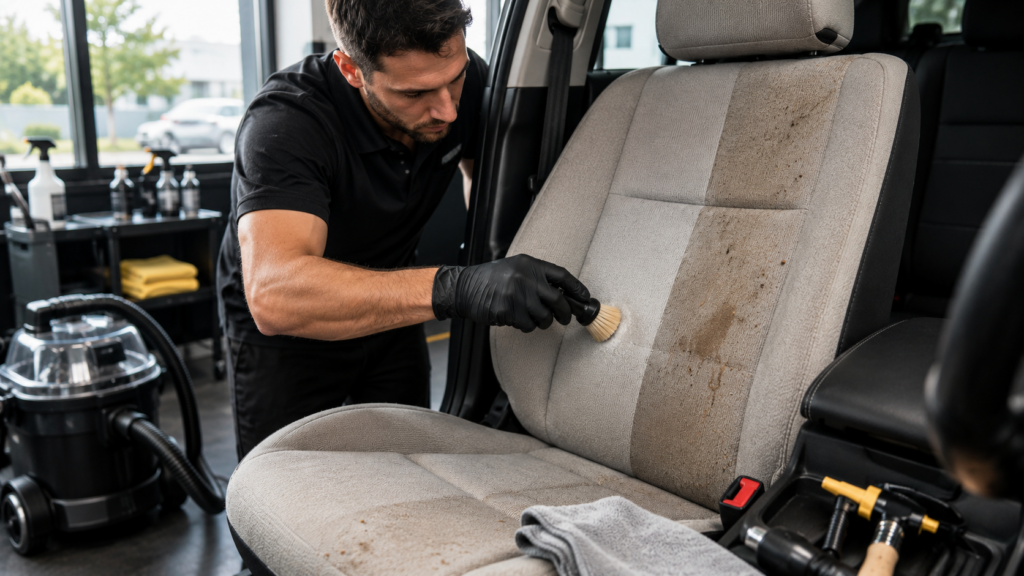
For fabric upholstery, a soft detailing brush can help loosen embedded contamination.
Use controlled movements rather than aggressive scrubbing. Excessive agitation can roughen fibres and create a visibly different texture around the treated area.
Step 6: Remove the Cleaning Residue
Cleaning is not finished simply because the stain looks lighter.
Residual cleaning product can attract dirt if it remains in the upholstery. Where appropriate, remove loosened residue with a clean damp microfibre towel or suitable extraction method.
Step 7: Allow the Seat to Dry Thoroughly
Good ventilation is important after interior cleaning.
Leave doors or windows open where safe and practical, and allow sufficient drying time before using the vehicle normally.
A damp seat that remains poorly ventilated can develop unpleasant odours.
How to Remove Different Types of Car Seat Stains
Different stains require different approaches. Treating an oily mark in the same way as a coffee spill is unlikely to produce the best result.
Coffee and Tea Stains
Coffee is one of the most common car interior spills.
For a fresh spill:
- Blot the liquid immediately.
- Use a suitable fabric upholstery cleaner.
- Gently agitate the affected area.
- Remove residue with a clean towel.
- Allow the seat to dry completely.
Milk-based coffee can be more troublesome because proteins and fats can remain behind even after the visible liquid disappears.
If an old coffee stain has developed an odour or dark ring, professional upholstery cleaning may be more effective than repeated household treatments.
Food and Sauce Stains
Food stains can contain oils, sugars, colourants and proteins.
Remove solid material carefully first, without grinding it into the upholstery. Then treat the remaining mark with a suitable interior upholstery cleaner.
Avoid immediately applying excessive water. This can spread soluble components into surrounding fibres.
Grease and Oil Stains
Grease is particularly stubborn because it does not behave like a normal water-based spill.
Blot excess oil rather than rubbing it. A suitable automotive upholstery degreasing or stain-cleaning product may then be required.
Do not use an aggressive household solvent simply because it appears effective on another surface. Automotive upholstery can react differently.
Ink Stains
Ink can be challenging because some inks contain strong dyes and solvents.
Avoid experimenting with harsh chemicals on visible areas of the seat. Incorrect treatment can cause colour loss or spread the pigment.
For valuable interiors or significant ink contamination, professional treatment is usually the safer option.
Chocolate Stains
Remove hardened chocolate carefully before applying cleaner.
Do not aggressively scrape the upholstery. Once the bulk of the material has been removed, treat the remaining residue with a suitable upholstery cleaner.
Pet Stains and Odours
Pet accidents are more than a surface-cleaning issue.
The visible mark may be only part of the contamination. If liquid has penetrated into the padding, simply wiping the surface may leave an odour behind.
Professional interior cleaning can be worthwhile when pet contamination is extensive, particularly if the vehicle has accumulated pet hair, stains and persistent smells.
Silver Sponge’s detailing services include deep interior cleaning, carpet and mat cleaning, leather cleaning and conditioning, as well as seat shampooing depending on the service selected. See Silver Sponge’s car detailing services
How to Clean Fabric Car Seats Without Damaging Them
Fabric seats are forgiving, but they still need careful treatment.
Use Less Moisture Than You Think
One of the most common mistakes is soaking the seat.
Excess moisture can travel deep into the cushion and make drying difficult. It may also create watermarks or contribute to unpleasant smells.
Work in small sections and control the amount of cleaning solution being used.
Work From the Outside In
When treating a visible stain, start around the outer edge and gradually work towards the centre.
This helps reduce the risk of spreading the stain.
Don’t Over-Scrub
Aggressive brushing can damage fibres and leave a patch that looks different from the surrounding upholstery.
Several controlled passes are generally better than one extremely aggressive scrubbing session.
How to Clean Leather Car Seats
Leather needs a gentler approach.
1. Vacuum First
Remove dust and grit from seams and creases.
2. Use a Leather-Safe Cleaner
Apply an appropriate leather cleaner to a cloth or according to the product’s instructions.
3. Work in Small Sections
Clean one section at a time and avoid saturating the seat.
4. Wipe Away Residue
Use a clean microfibre cloth to remove loosened grime.
5. Condition When Appropriate
Leather conditioning can help maintain the material and reduce the dry appearance that can develop through regular use.
Professional interior detailing can be particularly useful for older leather seats with significant built-up grime.
What Not to Use on Car Seats
Some household cleaning tricks can cause more problems than they solve.
Avoid using:
- Bleach
- Strong solvents
- Undiluted disinfectants
- Abrasive powders
- Excessive amounts of water
- Hard-bristled brushes
- Unverified DIY chemical mixtures
A product that works on a kitchen bench or bathroom surface is not automatically suitable for automotive upholstery.
The same applies to aggressive stain-removal techniques found online. Always consider the material, manufacturer’s recommendations and potential effect on colour and finish.
When a Car Seat Stain Needs Professional Cleaning
DIY cleaning makes sense for small, recent spills. However, professional detailing becomes more worthwhile when stains are widespread, old or repeatedly returning.
Consider professional cleaning if:
- The stain has penetrated deeply into the seat.
- The upholstery has multiple stains.
- There is a persistent odour.
- Pet contamination is involved.
- The seat has extensive food or drink residue.
- Previous cleaning attempts have left watermarks.
- You are unsure which product is safe.
- The upholstery is delicate, heavily worn or expensive.
- You want the interior restored before selling the vehicle.
Professional equipment and appropriate cleaning processes can reach contamination that ordinary household towels cannot.
Silver Sponge’s full detailing service includes carpet and mat shampooing, along with leather cleaning and conditioning or seat shampooing to address surface grime and stains. View the full detailing service
How Professional Seat Cleaning Can Make a Difference
Professional interior detailing is not simply about making a seat look cleaner.
A thorough process considers the entire interior, including:
- Upholstery
- Seat seams
- Carpets
- Mats
- Door trims
- Dashboard surfaces
- Console areas
- Hard-to-reach sections
Silver Sponge’s interior detail service includes a deep interior clean, detailed dashboard, console and door surfaces, carpet and mat cleaning, plus leather cleaning and conditioning or seat steam cleaning depending on the vehicle and service requirements.
For heavier contamination, a more comprehensive detailing package may be appropriate rather than repeatedly treating individual spots.
How to Prevent Car Seat Stains in the Future
Removing stains is only half the job. Prevention makes ongoing maintenance much easier.
Deal With Spills Immediately
Keep a clean microfibre towel in the vehicle. Blot spills as soon as it is safe to do so.
Avoid Eating in the Car Where Practical
Food creates crumbs, grease and stains that accumulate quickly, particularly in family vehicles.
Clean Children’s Mess Promptly
Small spills become harder to remove once they dry and are repeatedly compressed into the upholstery.
Manage Pet Hair and Dirt
Use appropriate seat covers or protective solutions when transporting pets.
Consider Interior Protection
Interior protection can help make fabric and carpet more resistant to spills and stains, giving you more time to clean up accidental messes.
Silver Sponge’s interior protection service includes fabric and carpet protection designed to help resist spills and stains, along with leather conditioning and sealing.
Schedule Regular Interior Cleaning
A regular clean prevents minor contamination from becoming a major restoration job.
A professional car wash and interior cleaning service can be a practical way to keep your vehicle maintained while you get on with your day.
How Often Should You Clean Car Seats?
There is no single schedule that suits every vehicle.
A vehicle used for school runs, pets, work sites or frequent travel will generally need interior cleaning more often than a car used occasionally.
A practical approach is:
| Vehicle Use | Suggested Approach |
| Light everyday use | Vacuum and spot-clean regularly |
| Family vehicle | Clean spills promptly and schedule periodic interior detailing |
| Pet transport | Frequent vacuuming and deeper upholstery cleaning |
| Work vehicle | Regular professional interior cleaning may be worthwhile |
| Heavy staining | Professional detailing as required |
| Before selling | Consider a comprehensive interior and exterior detail |
The condition of the upholstery is a better indicator than simply counting months between cleans.
Frequently Asked Questions
1. What is the best way to remove car seat stains?
The best method depends on the upholstery and type of stain. Blot fresh spills, use a material-appropriate cleaner, gently agitate fabric and avoid excessive moisture.
2. Can I use dishwashing liquid on car seats?
It is better to use a product specifically formulated for automotive upholstery. Dishwashing products may not be suitable for every automotive material and can leave residue.
3. How do I remove old stains from fabric car seats?
Old stains may require repeated controlled treatment or professional upholstery cleaning. Avoid aggressive scrubbing or soaking the seat.
4. How do I remove coffee stains from car seats?
Blot fresh coffee immediately, then use an appropriate upholstery cleaner. Milk-based coffee may require deeper cleaning because fats and proteins can remain in the fabric.
5. Can baking soda remove car seat stains?
Baking soda may help with certain odours, but it is not a universal stain remover. Its effectiveness depends on the stain and upholstery material.
6. How do I remove stains from leather car seats?
Use a leather-specific cleaner, work gently in small sections and condition the leather where appropriate. Avoid harsh household chemicals and excessive water.
7. Why do car seat stains come back after cleaning?
A stain can reappear when contamination remains beneath the surface or when cleaning residue attracts new dirt. Deep extraction or professional cleaning may be necessary.
8. How do I get smells out of car seats?
First identify and remove the source of the odour. Surface wiping may not be enough when liquids, food or pet contamination has penetrated the upholstery or padding.
9. Should I steam clean my car seats?
Steam cleaning can be suitable for some automotive upholstery when performed correctly, but the process must match the material and manufacturer’s care requirements.
10. When should I get professional car seat cleaning?
Professional cleaning is worthwhile for widespread staining, persistent odours, pet contamination, heavily soiled interiors or delicate materials where DIY treatment could cause damage.
Conclusion
Learning how to remove car seat stains is largely about using the right process rather than the strongest cleaning product. Identify the upholstery, remove loose contamination, blot spills instead of rubbing them, use a suitable cleaner and control the amount of moisture.
For minor fresh stains, careful spot cleaning may be all that is needed. Older stains, persistent smells, pet contamination and heavily soiled upholstery can require more advanced cleaning techniques and equipment.
If your vehicle’s interior needs more than a quick DIY clean, Silver Sponge offers professional car washing and detailing across Perth, with services ranging from interior and exterior washes through to deeper interior detailing and full detailing.