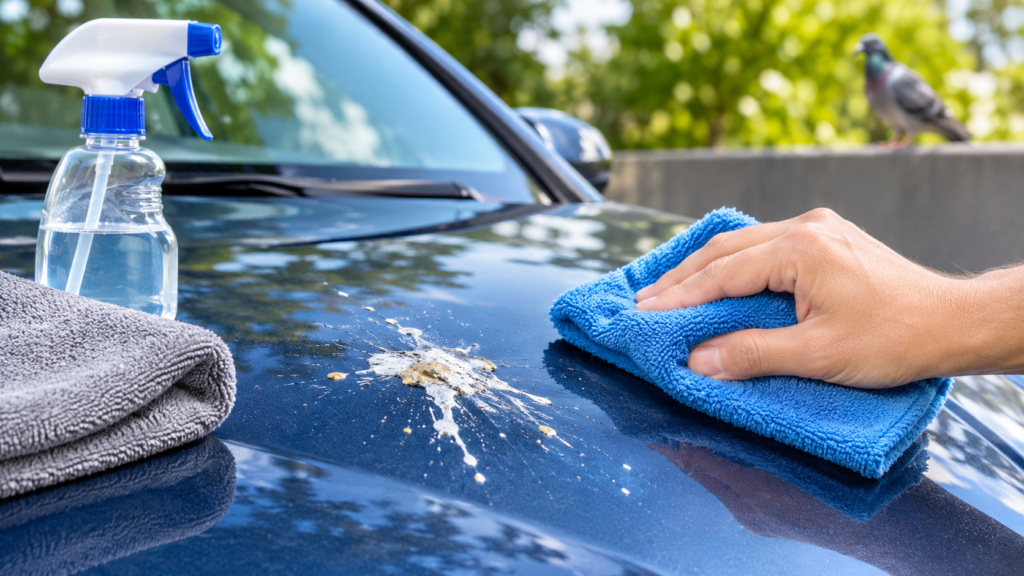
You walk out to the car, and there it is: a white-and-grey splat right across the bonnet. Most of us have been there, especially if we park under a gum tree or near a lake. Wiping it off with a dry tissue seems like the quick fix, but that’s the move that scratches paint.
Bird droppings are mildly acidic, and in Australian heat they can mark clear coat surprisingly fast. The good news is that bird dropping removal from a car is simple when you use the right method. This guide covers how to do it safely, what to avoid, and how to stop the problem from coming back.
Can Bird Droppings Damage Car Paint?
Yes, they can. Bird poo on a car doesn’t just sit on the surface. Droppings contain uric acid along with seeds, grit and, depending on the bird, bits of fruit or insects. Once a dropping dries, it hardens and bonds to the clear coat.
Heat makes it worse. A dark car in direct summer sun can get hot enough to soften the clear coat slightly. As the dropping dries and contracts, it can leave an etched outline, a dull patch or a faint ring that stays after you’ve cleaned it off.
Typical damage includes:
- Etching: a shallow dent or ring in the clear coat
- Staining: discolouration, most visible on white, black and red paint
- Dulling: loss of gloss where the acid has sat
- Scratches: swirl marks caused by rubbing a dry, gritty dropping
Fresh droppings are usually harmless to wipe away. Old, baked-on ones are where the trouble starts.
How Quickly Should Bird Droppings Be Removed?
As soon as you safely can, ideally within a few hours, and certainly the same day.
In hot, sunny weather, damage can begin quickly. In cool or overcast conditions you have more breathing room, but I wouldn’t leave it past a day or two. A dropping that has been through a few heat cycles of baking and cooling is much more likely to leave a permanent mark.
If you can’t clean it straight away, don’t panic. Just avoid touching it, and plan to soften and lift it as soon as possible.
What You’ll Need
Keep a small kit in the boot so you’re never caught out:
- A bottle of clean water (or a trigger spray bottle)
- Two or three clean, soft microfibre towels
- A quality quick detailer spray or a pH-neutral car wash
- A bucket if you’re washing at home
- A soft wash mitt
Skip paper towels, kitchen sponges and old rags. They’re coarser than they look and can leave fine scratches in the clear coat.
How to Safely Remove Bird Droppings From Car Paint
This is the method I’d recommend to anyone, whether the dropping is fresh or has been there a day or two.
Step 1: Don’t Wipe It Dry
A dry dropping is full of hard particles. Rubbing it drags them across the paint like sandpaper. Always add moisture first.
Step 2: Soften It
Soak a clean microfibre towel in water or quick detailer spray and lay it over the dropping. Leave it for five to ten minutes (longer for dried-on marks). The moisture rehydrates the dropping so it lifts instead of scraping.
For stubborn spots, re-wet the towel rather than pressing harder.
Step 3: Lift, Don’t Scrub
Once it’s soft, gently lift the bulk of the dropping away in one direction. Fold the towel to a clean section for each pass. Never rub in circles.
Step 4: Rinse or Spray
Rinse the area with plenty of water, or spray with quick detailer and wipe gently with a fresh towel. This removes any remaining residue and acid.
Step 5: Check the Paint
Look at the area from a couple of angles in good light. If you can see a faint outline or dull patch, the clear coat has begun to etch. Light etching can often be corrected by a professional with machine polishing, but don’t try to fix it yourself with abrasive products.
Step 6: Protect the Spot
Once it’s clean, a layer of wax or sealant helps restore the barrier on that panel. It also makes the next dropping much easier to remove.
What Not to Do
| Avoid | Why it’s a problem |
| Wiping with a dry cloth or tissue | Drags grit across the paint and causes scratches |
| Using a scourer or kitchen sponge | Abrasive surface marks the clear coat |
| Scraping with a fingernail or tool | Gouges the paint |
| Using household cleaners, dishwashing liquid or glass cleaner | Can strip wax and dry out sealants |
| Cleaning in direct sun on a hot panel | Product dries too quickly and can streak |
| Letting it bake for days | Raises the risk of permanent etching |
What Is the Safest Way to Clean Bird Droppings?
The safest method is to soften the dropping with a wet microfibre towel or quick detailer, lift it off gently without rubbing, then rinse the area and protect it.
The key points are moisture, patience and a light touch. If you’re ever unsure, stop and let a professional handle it. A cheap shortcut can cost far more in paint correction than a proper clean would have.
Quick Fixes When You’re Out and About
Sometimes you’re at the shops with a splat on the windscreen and nothing in the car. A few options:
- Pick up a bottle of water and a clean microfibre or soft cloth.
- Soak the dropping first, give it a few minutes, then lift.
- For a longer-term fix, keep pre-moistened detailing wipes designed for automotive paint in the glovebox.
Avoid pub napkins and servos’ paper towels. They look soft but aren’t.
How to Prevent Bird Droppings From Damaging Your Paint
You can’t control the birds, but you can control how well your car handles them. Good car paint care makes a big difference.
Choose Where You Park
- Avoid parking under trees, power lines and light poles where birds roost
- Steer clear of areas near water, bins and outdoor dining
- Use a covered carport or garage when you can
- A breathable car cover helps if you park outdoors regularly
Wash Regularly
A clean car with a healthy layer of wax or sealant sheds contamination more easily. Droppings on dirty, unprotected paint tend to cling harder and cause more damage.
Add Paint Protection
This is where the real gains are. Paint protection such as sealants or ceramic coatings creates a hard, slick barrier between the clear coat and whatever lands on it. Bird droppings sit on top of that layer instead of bonding to your paint, so they wipe away more easily and give acids less time to attack the surface.
It isn’t a licence to ignore a dropping for a week, but it does buy you time and reduces the chance of etching. If you’re weighing up your options, a professional car detailing service can assess your paint and recommend protection that suits how and where you drive.
When to Call a Professional
Consider getting expert help if:
- You can see a visible etch, ring or dull patch after cleaning
- The dropping has been there for several days in hot weather
- The affected area is large or on a dark-coloured car where marks show easily
- You’d like long-lasting protection applied properly
A trained detailer can assess whether the damage sits in the clear coat and correct it safely, rather than guessing. If you’re not sure how bad it is, get in touch with the Silversponge team and we’ll point you in the right direction.
Conclusion
Bird droppings are one of those everyday annoyances that can quietly turn into a permanent blemish. The fix is simple: act quickly, soften before you touch, lift gently and protect the paint afterwards. Do that consistently and your car will stay glossy through plenty of magpie seasons.
Need a hand? Whether it’s a stubborn etched mark or long-term protection, Silversponge can help. Contact us today for friendly advice or to book your car in for a professional clean and protect.
FAQs
1. How quickly should bird droppings be removed?
As soon as you safely can, ideally within a few hours and the same day if possible. In hot weather, damage can begin quickly.
2. Can bird droppings damage car paint?
Yes. They’re acidic and can etch the clear coat, especially when baked on by the sun. Fresh droppings are far less risky than dried ones.
3. What is the safest way to clean bird droppings?
Soak the dropping with water or quick detailer on a microfibre towel for several minutes, lift it gently without rubbing, then rinse and protect the paint.
4. Is bird poo on a car worse in summer?
Generally yes. Heat dries the dropping faster and makes the paint more vulnerable, so etching is more likely.
5. Can I use baby wipes or tissues on bird droppings?
It’s best not to. They can be abrasive or leave residue. A wet microfibre towel or purpose-made detailing wipe is safer.
6. Will washing the car remove bird droppings completely?
A normal wash will remove fresh droppings, but dried-on ones may need pre-soaking first. Washing without softening can drag grit across the paint.
7. Can etched paint from bird droppings be fixed?
Light etching can often be removed by a professional with machine polishing. Deep etching may need more extensive correction.
8. Does paint protection stop bird droppings damaging paint?
It doesn’t make paint immune, but a sealant or ceramic coating adds a barrier and makes droppings easier to remove, reducing the risk of etching.
9. Does wax help against bird droppings?
A good wax or sealant adds a sacrificial layer, but it wears away faster than a ceramic coating and needs reapplying regularly.
10. When should I see a professional about bird dropping damage?
If you can see a ring, dull patch or stain after cleaning, or if the dropping has been left for days in the sun.