A car rarely loses its shine in one go. It happens slowly. A few bird droppings baked on over summer, a season of parking in direct sun, a coffee spill that never quite came out, and one day the paint looks tired and the dash has started to fade.
The good news is that the habits which maintain car appearance are simple, and most of them cost very little. This guide covers how to keep your car looking new inside and out, which products are worth buying, what to do weekly, monthly and yearly, and when to hand the job to a professional.
Why Cars Age Faster in Australia
Australian conditions are tough on vehicles. Understanding what you’re up against makes it much easier to protect against it.
- UV radiation breaks down clear coat, fades plastics and cracks dashboards.
- Heat bakes contaminants onto paint and speeds up chemical etching.
- Salt air and road salt encourage corrosion on exposed metal, especially near the coast.
- Bird droppings and tree sap are acidic and can mark paint within days in warm weather.
- Dust, bitumen and brake dust embed in the surface and dull the finish.
Good car care tips come down to one idea: keep damaging substances off the car, and keep a protective layer between the car and the elements.
How to Maintain Car Appearance: The Core Routine
Think of car appearance as a routine, not a project. Here’s a simple schedule that works for most drivers.
| Frequency | Task |
| Weekly | Quick interior tidy, remove rubbish, wipe high-touch surfaces |
| Every 2 weeks | Proper hand wash, wheels and tyres, glass |
| Monthly | Vacuum thoroughly, wipe interior surfaces, check for chips and marks |
| Every 3 months | Apply spray sealant or wax top-up, condition leather and rubber seals |
| Every 6–12 months | Professional detail, decontamination and paint protection |
| As needed | Remove bird droppings, sap, bugs and spills immediately |
Keeping the Exterior Looking New
Wash It Properly (and Regularly)
Washing is the single biggest factor in how your paint ages, but technique matters. Most swirl marks come from the wash, not the road.
- Rinse first to lift loose dirt before you touch the paint.
- Use the two-bucket method: one bucket for soapy water, one for rinsing the mitt.
- Use a pH-neutral car shampoo. Dishwashing liquid strips wax and sealants.
- Use a clean microfibre mitt, not a sponge or old rag.
- Wash top to bottom and do the wheels last, since they carry the worst grit.
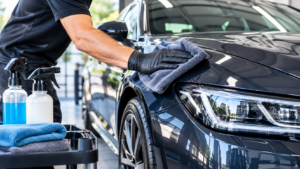
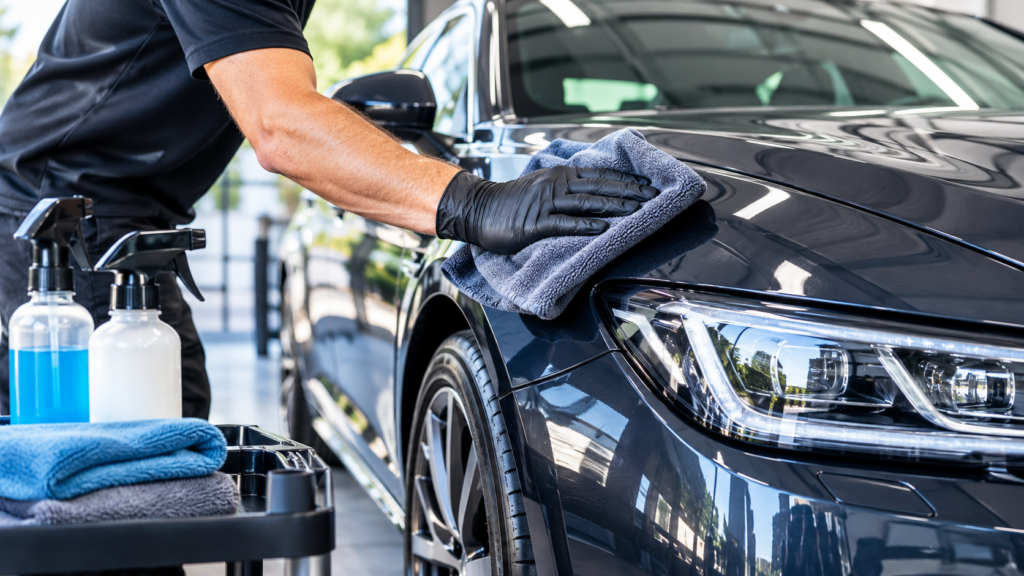
- Dry with a clean microfibre drying towel to avoid water spots.
Wash in the shade, never on hot panels, or the soap dries before you can rinse it. If you’re short on time or space, a regular professional car wash keeps the paint clean between deeper treatments.
Deal With Contaminants Fast
Some marks can’t wait for the next wash.
- Bird droppings: soften with a damp microfibre cloth and lift gently. Don’t scrub dry.
- Tree sap: use a dedicated sap remover or a little isopropyl alcohol on a cloth, then wash and re-protect that spot.
- Bugs: soak with a bug remover or wet cloth before wiping.
- Bitumen spots: use a tar remover, then wash.
A small kit in the boot (a spray bottle of quick detailer and two clean microfibre cloths) makes this easy.
Add a Protective Layer
Paint with no protection is exposed paint. You have three main options.
| Protection | Typical Lifespan | Best For |
| Carnauba wax | 4–8 weeks | Warm, deep gloss and enthusiasts who enjoy applying it |
| Paint sealant | 3–6 months | Easy, durable DIY protection |
| Ceramic coating | Years, depending on product and care | Long-term protection and easier washing |
| Paint protection film | Many years | High-impact areas such as the bonnet and front bumper |
Lifespans vary with the product, preparation and how the car is parked and washed, so treat these as general guides. Whichever you choose, the paint must be clean and decontaminated first, otherwise you’re sealing in the dirt.
Don’t Forget Wheels, Tyres and Glass
- Clean wheels with a dedicated wheel cleaner and soft brush. Brake dust is corrosive and builds up quickly.
- Apply a water-based tyre dressing for a clean finish without the slinging sticky residue.
- Clean glass inside and out with a dedicated glass cleaner and a fresh microfibre cloth. The inside film from vinyl off-gassing is a common cause of hazy windscreens.
- Replace worn wiper blades. Smeared glass is both a safety issue and an eyesore.
Park Smart
Where you park matters as much as how you wash.
- Choose a garage or covered spot where possible.
- Park in shade, especially during the middle of the day.
- Use a quality windscreen sunshade to protect the dash.
- Avoid parking under trees that drop sap, fruit or bird droppings.
- If the car lives outside, consider a breathable car cover for long stays.
Keeping the Interior Looking New
The interior is where wear shows up first, because it’s used every day. A few habits go a long way.
Vacuum and Wipe Often
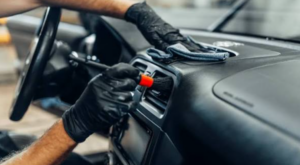
Grit acts like sandpaper on carpet, seats and leather. Vacuum monthly at least, including under the seats and in the boot. Wipe the dash, door trims and centre console with a soft microfibre cloth and a suitable interior cleaner.
Protect Leather, Vinyl and Plastics
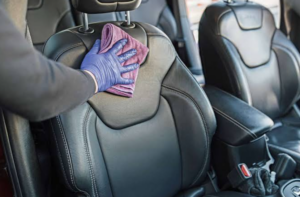
- Leather: clean gently, then condition every three to six months to stop drying and cracking.
- Vinyl and plastics: use a UV-protective, non-greasy dressing. Avoid shiny silicone-heavy products that attract dust and glare.
- Rubber seals: wipe and treat with a rubber conditioner to stop them hardening.
Handle Spills Immediately
Blot, don’t rub. Soak up as much liquid as possible with a clean cloth, then treat the spot with a fabric-safe cleaner. Old stains set quickly in warm cabins.
Use Mats, Covers and Organisers
- Fit quality rubber or custom-fit floor mats to protect the carpet.
- Use seat covers or protectors if you have young kids, pets or a messy commute.
- Keep a small bin in the car so rubbish doesn’t build up.
Control Smells and Moisture
- Don’t leave wet towels, gym gear or food in the car.
- Air the cabin out regularly.
- Check for leaks if the carpets feel damp, since moisture leads to mould.
Do Regular Cleaning and Maintenance Prevent Long-Term Damage?
Yes. Regular cleaning removes the substances that damage paint, plastics and upholstery before they can cause permanent harm. Combined with protective products and sensible parking, it slows fading, oxidation, cracking and staining significantly. Cosmetic care also supports broader car maintenance, because a clean car makes it easier to spot chips, rust spots, tyre wear and leaks early.
DIY or Professional? Knowing When to Get Help
Home care handles the day-to-day. Some jobs are better left to someone with the right tools and experience.
Good DIY jobs:
- Washing and drying
- Vacuuming and wiping interiors
- Applying spray sealant or wax
- Dressing tyres and plastics
Better for a professional:
- Machine polishing to remove swirl marks and oxidation
- Clay bar and iron fallout decontamination
- Ceramic coating application
- Deep interior extraction and odour removal
- Headlight restoration
A professional car detailing service once or twice a year resets the finish and gives your home routine a clean foundation to build on. If you’re not sure what your car needs, you can ask the team for advice and they’ll point you to the right option.
Common Mistakes That Age a Car Faster
- Washing with dishwashing liquid or household cleaners
- Using one dirty sponge or towel on the whole car
- Washing in direct sun or on hot panels
- Leaving bird droppings and sap on the paint
- Using automatic washes with worn brushes regularly
- Applying wax or sealant over dirty paint
- Ignoring small chips until rust appears
- Skipping interior vacuuming
- Leaving the car in direct sun without a sunshade
What to Keep in Your Car Care Kit
If you’re starting from scratch, this short list covers most needs.
- pH-neutral car shampoo
- Two buckets with grit guards
- Microfibre wash mitt and drying towel
- Quick detailer spray
- Spray sealant or wax
- Wheel cleaner and a soft brush
- Glass cleaner
- Interior cleaner and UV protectant
- Leather conditioner (if you have leather)
- Soft detailing brushes and a handheld vacuum
Conclusion
You don’t need a showroom budget to maintain car appearance for years. You need a steady routine, a protective layer on the paint, a bit of attention to the interior and a habit of dealing with problems early. Wash properly, protect often, park smartly and book a professional detail when the car needs a reset.
Want your car to look its best for years to come? Browse our car wash services, explore our detailing packages or contact us today and we’ll recommend a plan that suits your vehicle and budget.
Frequently Asked Questions
1. How do I maintain a brand-new look on my car?
Wash it every two weeks with a pH-neutral shampoo and clean microfibre, keep a sealant or wax on the paint, clean the interior regularly and park in shade. Remove bird droppings and sap quickly.
2. What products help preserve car paint and interior?
For paint, use a pH-neutral shampoo and a sealant, wax or ceramic coating. For the interior, use a UV-protective dressing for plastics, a leather conditioner and a fabric-safe cleaner.
3. Does regular cleaning prevent long-term damage?
Yes. Frequent cleaning removes acidic and abrasive contaminants before they etch paint or wear down upholstery, and it helps you spot problems early.
4. How often should I wash my car to keep it looking new?
Every two weeks is a good baseline. Wash more often after rain, road trips, beach visits or if the car is parked under trees.
5. How often should I wax or seal my car?
A wax typically needs reapplying every one to two months, and a sealant every three to six months. Ceramic coatings need periodic maintenance washes and top-ups.
6. Is a ceramic coating worth it?
For many owners, yes. It makes washing easier and offers longer-lasting protection than wax, but it needs proper paint preparation and ongoing care to perform well.
7. How do I stop my dashboard from cracking?
Use a windscreen sunshade, park in shade where possible and apply a UV-protective dressing regularly.
8. How do I keep leather seats looking new?
Wipe them regularly, clean with a leather-safe cleaner and apply conditioner every three to six months.
9. What’s the best way to remove bird droppings from paint?
Soften them with a wet microfibre cloth or quick detailer and lift gently. Wash the area and top up protection afterwards.
10. When should I get a professional detail?
Once or twice a year suits most cars. Consider it sooner if the paint looks dull, has swirl marks or oxidation, or the interior has stains and odours.