You spend an hour on the driveway, the paint looks brilliant, and then the sun hits it. Suddenly the bonnet and windows are covered in little white rings. It’s one of the most common frustrations in Australian car care, and it’s almost always avoidable.
A water spot-free car wash comes down to three things: where and when you wash, what touches the paint, and how fast and how well you dry. Get those right and the finish takes care of itself.
This guide explains why spotting happens, walks you through a proven wash routine, and covers the car drying methods that make the biggest difference. If you want to learn how to wash a car without watermarks, start here.
What Causes Water Spots on Cars?
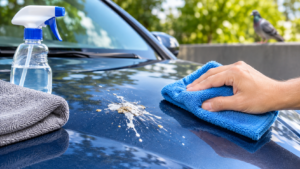
Water spots are the mineral deposits left behind when a water droplet evaporates. The water disappears, but everything dissolved in it stays on the surface.
Quick answer: Water spots are caused by minerals (mainly calcium and magnesium) in hard water, plus dirt and soap residue, drying onto the paint, glass or trim before they’re wiped away. Heat, direct sun and wind speed this up.
Hard Water and Dissolved Minerals
Tap water in many parts of Australia carries a fair load of minerals. Perth, Adelaide and parts of regional Victoria and Queensland tend to have harder water than, say, Melbourne’s supply. The harder the water, the more visible the residue.
Sun, Heat and Wind
A bonnet that’s been baking in summer sun can hit temperatures that flash-dry droplets in seconds. There’s no time for you to get to them with a towel, so the minerals bake on.
Sprinklers, Rain and Dew
Not all spotting comes from your hose. Bore water and irrigation systems often contain iron and other minerals that stain, and rain can carry dust and pollutants that dry into spots. Parking near sprinklers is a recipe for trouble.
The Three Types of Spot
| Type | What it looks like | How to deal with it |
| Type 1: Surface deposits | Light white rings sitting on top of the paint | Usually wipes off with a quick detailer or a fresh wash |
| Type 2: Bonded minerals | Rough, chalky spots that don’t budge with washing | Needs a dedicated water spot remover or clay treatment |
| Type 3: Etched spots | Visible dull marks in the clear coat | Needs machine polishing, ideally by a professional |
The earlier you catch spots, the easier they are to remove. Left for weeks in the sun, Type 1 turns into Type 3.
What You’ll Need for a Streak-Free Finish
You don’t need a shed full of gear. You do need the right gear:
- Two buckets (one for soapy water, one for rinsing your mitt), ideally with grit guards
- A pH-balanced car wash shampoo
- A quality microfibre wash mitt
- A large, plush microfibre drying towel (or two)
- A hose with a decent nozzle, or a pressure washer
- Optional: an inline water filter, a drying aid or spray sealant, a leaf blower or car dryer
If you’d rather skip the shopping, the Silversponge wash packs bundle the essentials so you’re not guessing which products work well together.
Step-by-Step: How to Wash a Car Without Watermarks
Step 1: Pick the Right Time and Place
Wash in the shade, early morning or late afternoon. The panels should be cool to the touch. If you can’t feel heat coming off the bonnet, you’re good to go.
Avoid washing under trees that drip sap or near sprinklers. If the only spot available is in the sun, work one panel at a time and rinse and dry each before moving on.
Step 2: Rinse Thoroughly First
Start from the roof and work down, using plenty of water to lift loose dirt and grit. This pre-rinse removes the abrasive material that causes swirl marks when you start touching the paint.
Step 3: Use the Two-Bucket Method
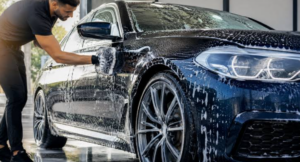
Load your mitt with soapy water, wash one panel, then rinse the mitt in the clean bucket before going back to the soap. This keeps dirt out of your wash solution, which also means fewer streaks and less residue.
Work top to bottom. The lower panels are the dirtiest, so leave them for last.
Step 4: Wash in Straight Lines
Gentle, straight passes are better than circles. Don’t scrub. Let the shampoo do the work.
Step 5: Rinse Panel by Panel (Not Just at the End)
On warm days, rinse each section soon after washing it so the soap never dries. Soap that dries on the surface is one of the most common causes of streaking.
Step 6: Do a Final Rinse the Smart Way
Remove the nozzle and let water flow gently over the panels in a sheet. This “sheeting” technique pulls most of the water off in one go, so there’s far less left to dry. Fewer droplets means fewer spots.
Step 7: Dry Immediately
This is where most people lose the battle. Don’t let the car air-dry. Move straight to drying while the surface is still wet.
Car Drying Methods That Prevent Water Spots
Quick answer: To dry a car without spots, remove most of the water with a leaf blower or car dryer if you have one, then blot or glide a clean, plush microfibre drying towel over each panel. Work in the shade, start at the roof and use a drying aid for extra slip.
Method 1: Plush Microfibre Drying Towel
This is the most popular option and it works well when used properly.
- Lay the towel flat across a panel.
- Pat or drag it gently towards you. Don’t press hard.
- Wring out or swap to a dry towel once it’s saturated.
- Finish glass and chrome with a separate, clean towel.
Cheap or worn-out towels leave lint and streaks. A good drying towel is worth the money.
Method 2: Forced Air (Leaf Blower or Car Dryer)
Blowing water off the car is the gentlest way to dry paint because nothing touches it. It’s also great for mirrors, door handles, badges and grilles where water hides and then runs out later, leaving trails.
Method 3: Drying Aid or Spray Sealant
Lightly mist a drying aid on the wet panel and wipe as you dry. It adds lubrication, reduces towel drag, and leaves behind a layer that helps water bead and slide off next time.
Method 4: Filtered or Deionised Water
If you’re serious about a water spot-free car wash, filtering the water is the real fix. A deionised water filter removes the minerals before they reach your car, so even if droplets dry, there’s nothing left to leave a mark. It’s a bigger upfront cost but popular with enthusiasts in hard water areas.
Drying Methods Compared
| Method | Spot protection | Cost | Best for |
| Microfibre towel | Good | Low | Everyday washes |
| Leaf blower / dryer | Very good | Medium | Crevices, mirrors, trim |
| Drying aid + towel | Very good | Low | Added gloss and slickness |
| Deionised water | Excellent | Higher | Hard water areas, perfectionists |
Do Certain Soaps Reduce Spotting?
Quick answer: Yes. A pH-neutral car shampoo rinses cleanly and leaves little residue, which helps reduce spotting and streaks. Avoid dishwashing liquid, which strips wax and sealants and can dry on the surface. Some shampoos also contain water softeners or polymers that help water sheet off.
What to Look For
- pH-balanced formula: Gentle on paint, wax and ceramic coatings
- Good lubricity: Helps the mitt glide, which reduces marring
- Free rinsing: Doesn’t cling to the surface
- Water-softening additives: Useful in hard water areas
What to Avoid
- Dishwashing detergent or household cleaners
- Heavily concentrated products used at too high a ratio (more soap isn’t better, it’s harder to rinse)
- Soap left to dry on the paint
Not sure which product suits your car or local water? Reach out through the Silversponge contact page and the team can point you in the right direction.
Tips for Streak-Free Cleaning on Glass and Trim
Glass shows spots and streaks faster than paint, so it deserves its own attention.
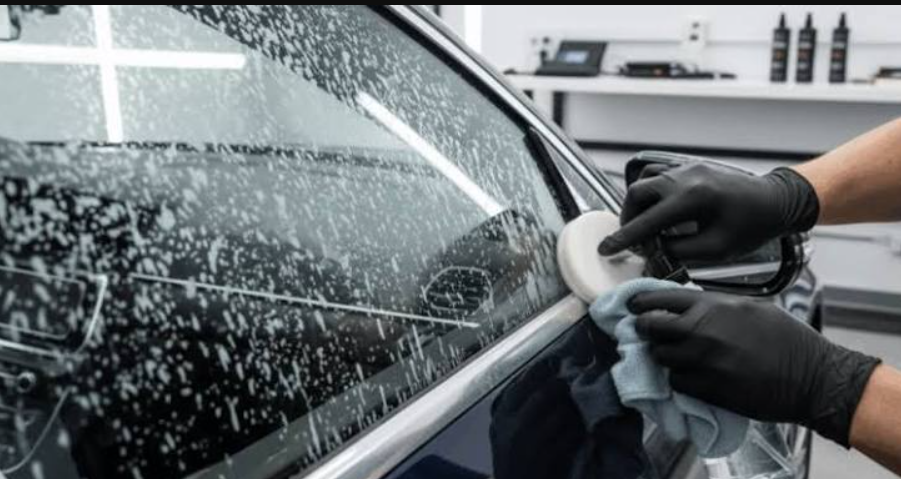
- Use a dedicated glass cleaner, not your car shampoo
- Spray the towel, not the window, to avoid overspray on paint
- Clean the inside and outside in opposite directions (up-and-down on one side, side-to-side on the other) so you can tell which side a streak is on
- Replace towels as soon as they get damp
For black plastic trim, dry it thoroughly, because mineral spots show up as chalky white marks that are harder to shift than on paint.
How to Remove Water Spots That Have Already Formed
- Re-wash the car and try a quick detailer on fresh spots.
- Use a dedicated water spot remover (a mild acidic product) on stubborn Type 2 marks, following the label carefully and working on small areas.
- Clay bar the panel if the surface feels rough.
- Apply a wax, sealant or ceramic coating to protect the paint afterwards.
- Book a professional paint correction if the spots are etched. Etching can’t be washed away, only polished out.
If you’d prefer to leave it to the experts, the Silversponge car detailing service can restore paint that’s been marked by hard water or sun-baked mineral deposits.
How to Keep Water Spots Away Long Term
- Protect the paint. Wax, sealant or ceramic coating makes water bead and roll off, so less sits on the surface
- Dry after rain when you get the chance, especially in summer
- Park away from sprinklers and avoid washing near bore water
- Wash regularly. Light, frequent washes are easier than rescuing a neglected car
- Consider a professional wash now and then. A Silversponge premium wash uses controlled processes designed to keep your paint spot-free
Conclusion
A water spot-free car wash isn’t about secret products. It’s about cool panels, clean tools, free-rinsing shampoo, and drying the car before the sun does it for you. Master those, add a good drying towel or a leaf blower, and you’ll get that streak-free finish every time.
Want the right gear without the guesswork? Browse the Silversponge wash packs and get everything you need for a spotless result. Prefer a hand-off? Get in touch with the Silversponge team and let us take care of your car.
Frequently Asked Questions
1. What causes water spots on cars? Minerals left behind when water evaporates. Hard water, heat, direct sun, wind and sprinklers all increase the chance of spotting.
2. How do I dry my car to prevent water spots? Wash in the shade, then dry straight away. Use a leaf blower or car dryer to remove the bulk of the water, followed by a clean, plush microfibre towel, working roof to bottom.
3. Do certain soaps reduce spotting? Yes. pH-neutral car shampoos rinse cleanly and leave little residue. Some include water softeners that help prevent mineral build-up. Never use dishwashing liquid.
4. Is it better to wash a car in the sun or shade? Shade. Direct sun dries water and soap quickly, which bakes minerals onto the paint.
5. Can water spots damage car paint? Yes. Left untreated, mineral deposits can etch into the clear coat, leaving permanent marks that need polishing to remove.
6. How do I remove water spots from car windows? Use a dedicated glass cleaner or a mild water spot remover, apply with a microfibre towel and buff dry. For stubborn marks, a glass polish can help.
7. Does a ceramic coating stop water spots? It doesn’t stop them completely, but the hydrophobic surface makes water bead and slide off, so there’s less to evaporate and the spots are easier to wash away.
8. Can I use a hose or pressure washer for a spot-free rinse? Yes, either works. For best results, finish with a gentle “sheeting” rinse (no nozzle) and dry immediately. An inline filter helps in hard water areas.
9. How often should I wash my car to avoid water spots? Every one to two weeks is a good rule of thumb, or sooner after rain, bird droppings or time parked near sprinklers.
10. Is a microfibre towel better than a chamois? For most people, yes. Quality microfibre absorbs more, is gentler on paint, and can be machine washed. A chamois can drag and streak if it isn’t kept clean.